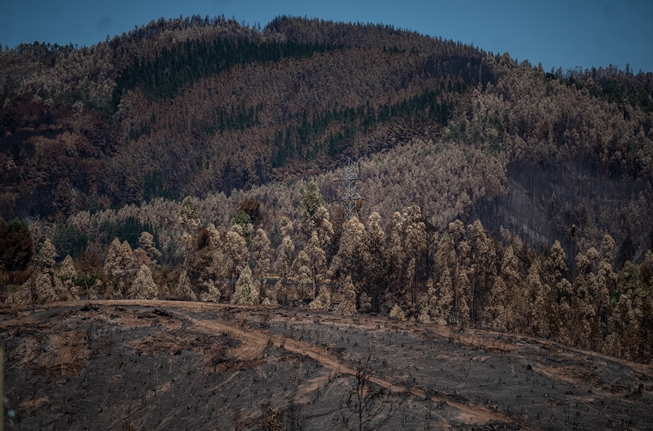

Specialized shredding emerges as a sustainable solution for creating protective barriers during high-risk seasons, combining effective prevention with environmental care.
With the arrival of spring and the imminent summer season, Chile and South America once again face the cyclical challenge of forest fires. Adverse climatic conditions—high temperatures, low relative humidity, and strong winds—turn vast areas of vegetation into potential fuel, demanding more efficient and sustainable prevention strategies.
In this scenario, mechanized firebreaks gain critical relevance. These strategically designed strips, where vegetation is removed to create discontinuities in the fuel, represent one of the most effective prevention measures. Construction using specialized shredding machines allows these barriers to be created quickly, efficiently, and in an environmentally responsible manner, without resorting to more invasive traditional methods.
The surface shredding technique transforms plant biomass—from shrubs to woody material—into a layer of mulch or wood chips that, far from being waste, serves vital ecological functions. This layer protects the soil from erosion, conserves moisture, and, as it gradually decomposes, enriches the land with organic matter. Additionally, by completely avoiding the use of fire for land clearing, associated emissions and the risk of these controlled burns getting out of control are eliminated.
The spring-summer season requires advance planning. Firebreak construction must be carried out before risk conditions peak, ideally during spring when vegetation still retains some moisture and operational conditions are safer. This preventive planning not only protects valuable forest areas but also safeguards communities, critical infrastructure, and zones of high ecological value.
Experience in countries like Chile, where the fire season has shown increasingly intense patterns, demonstrates that combining appropriate technology and specialized knowledge makes a difference. State-of-the-art shredding machines can operate on complex terrains and adapt to different types of vegetation, from dense shrubs to forest plantation residues, creating protective barriers that can range from a few meters to tens of meters in width.
In this context, fire-free land preparation techniques become particularly relevant. Specialized companies like Loginfor, with experience in sustainable biomass management since 2017, offer solutions that combine fire prevention with soil preservation. Their approach of specialized shredding for firebreak strips represents a viable alternative that protects both forest heritage and ecosystem health, demonstrating that prevention and sustainability can go hand in hand.