
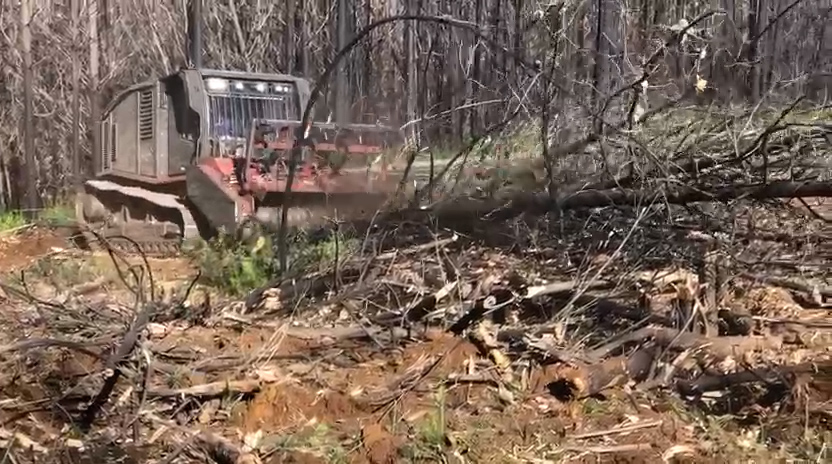
An innovative technique that transforms organic waste into soil nutrients, improving its structure and fertility without the need for burning.
Contemporary agriculture faces the challenge of increasing productivity without compromising soil health or the environment. In this context,Soil Biomass Incorporationemerges as a key practice for achieving sustainable land management, especially in regions where crop renewal is a constant necessity.
This technique involves mixing shredded material—from crop residues, pruning, or crop renewal—with the top layers of the soil, at depths ranging between 15 and 30 cm. This achieves a homogeneous integration that accelerates the decomposition of organic matter and enriches the soil with essential nutrients.
Among its main advantages areimproved soil structure, as it increases water retention capacity and promotes microbial activity. Additionally, by avoiding the burning of residues, CO₂ emissions are significantly reduced, and soil degradation is prevented—a critical issue in many agricultural areas.
Most importantly, lands treated with this methodology are ready for immediate sowing, optimizing time and costs for farmers. Each process is customized according to the type of crop and the specific conditions of the land, ensuring the best results.
Sustainable management of agricultural waste through techniques like soil biomass incorporation not only contributes to ecosystem health but also represents a smart medium- and long-term investment. Companies with expertise in shredding and land preparation, such asLoginFor, have developed specialized methodologies that allow this process to be executed efficiently, safely, and in an environmentally friendly manner, supporting producers in their transition toward regenerative agriculture.
Keywords:Biomass incorporation, sustainable agriculture, organic waste management, soil improvement, specialized shredding.